
Verification accuracy you can check for yourself.
A claim denial is the most severe sign that a verification was wrong, but many errors never lead to one. An accuracy rate would miss them, so we don't publish one. Here are all the things we do to maintain a consistently high level of accuracy.
Three ways a typical verification goes wrong.

One source, taken at face value
The portal shows a maximum or a frequency and it is copied down as the answer. Nobody compares it with the fax or asks a representative.

The plan is flattened to fit a template
A fixed list of questions holds one answer per benefit. When the plan has two limits for the same code, the second one is dropped.

Nothing can be audited afterwards
When a claim is denied, there is no record of what the carrier said, so nobody can tell where the error came from.

Three sources, checked against each other.
We check the carrier portal, then the faxed benefits, then a live representative. When two sources disagree, the disagreement becomes a question for the call.
Plans don't fit templates. We record what the plan says.
Most breakdown templates hold one answer per question. Real plans often have two. We ask every question your practice requires, and we also record what the carrier volunteers, in a structure detailed enough to keep it.
Not recorded: the second $2,000.00 maximum, which applies to X-rays, diagnostic, periodontics and implants.
| Maximum | Amount | Used | Remaining |
|---|---|---|---|
| Annual, individual: Preventive, Basic, Major | $2,000.00 | $485.00 | $1,515.00 |
| Annual, individual: X-rays, Diagnostic, Periodontics, Implants | $2,000.00 | $0.00 | $2,000.00 |
A specialist checks every breakdown before release.
The AI retrieves the information and builds the breakdown. A US-based specialist with experience in insurance verification and billing then checks it against the sources and corrects it. Nothing is written into your dental software before that.
Every verification comes with its sources.
Each breakdown and eligibility check is uploaded to your dental software with one source document. It compiles the portal record, the fax the carrier sent us, and the transcript of the call with the representative.
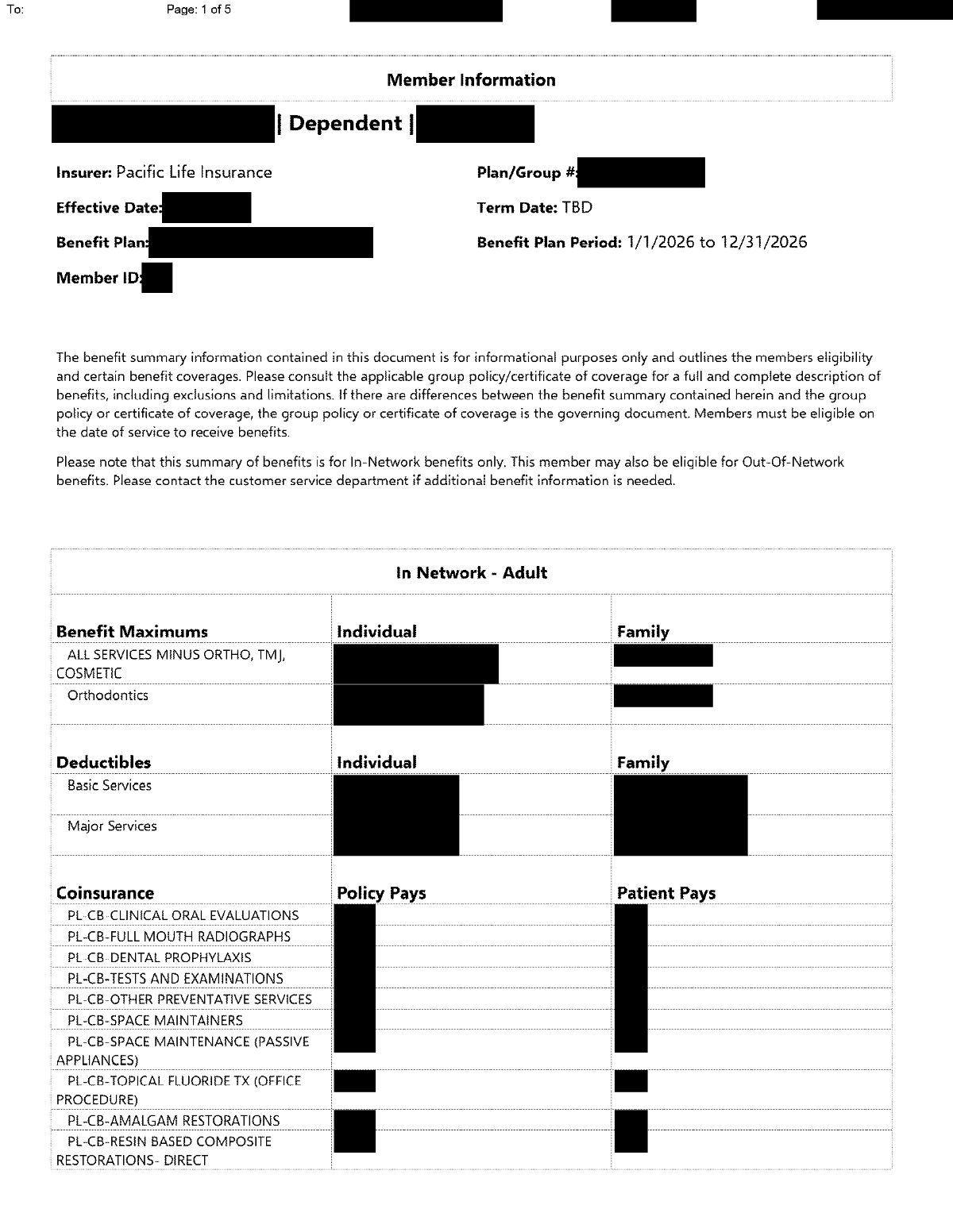
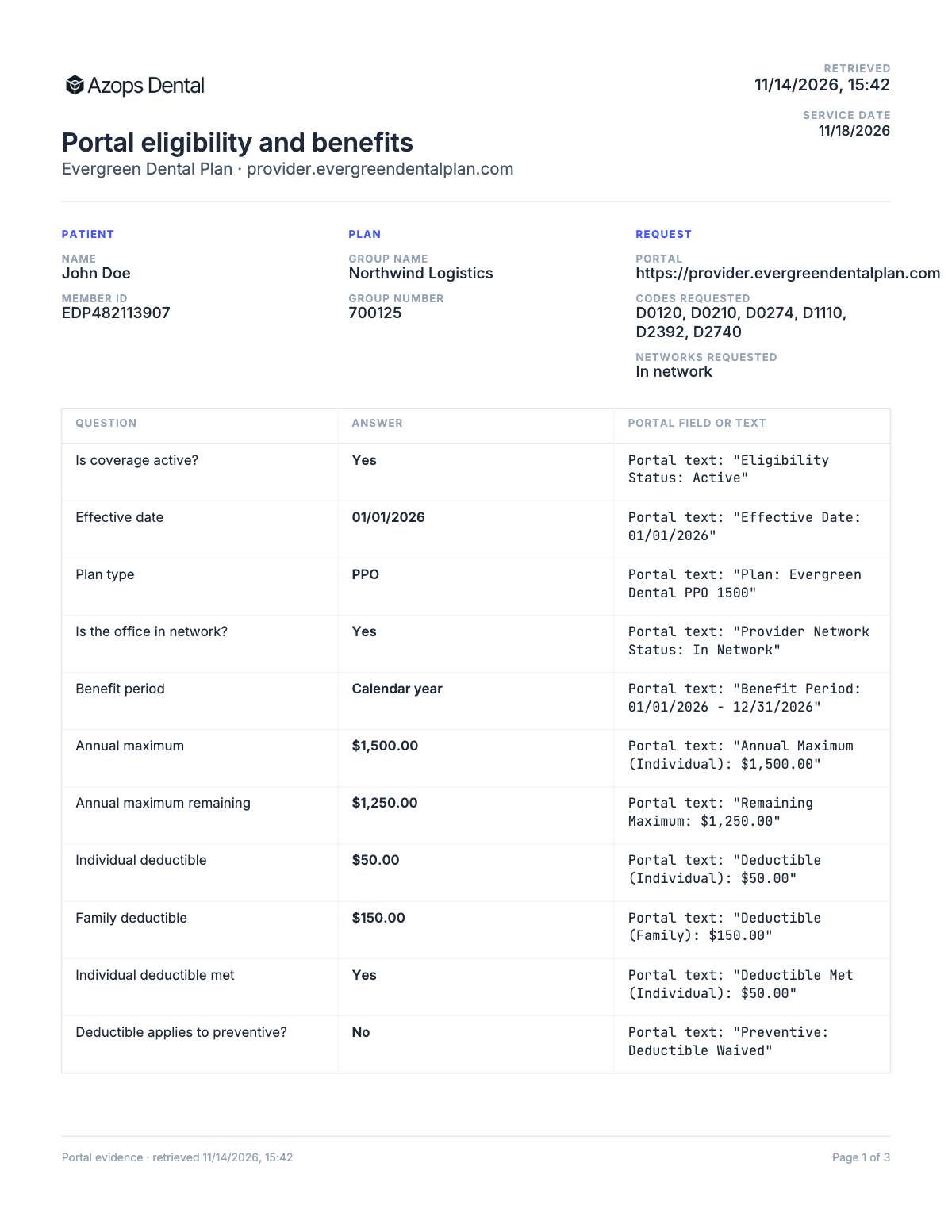
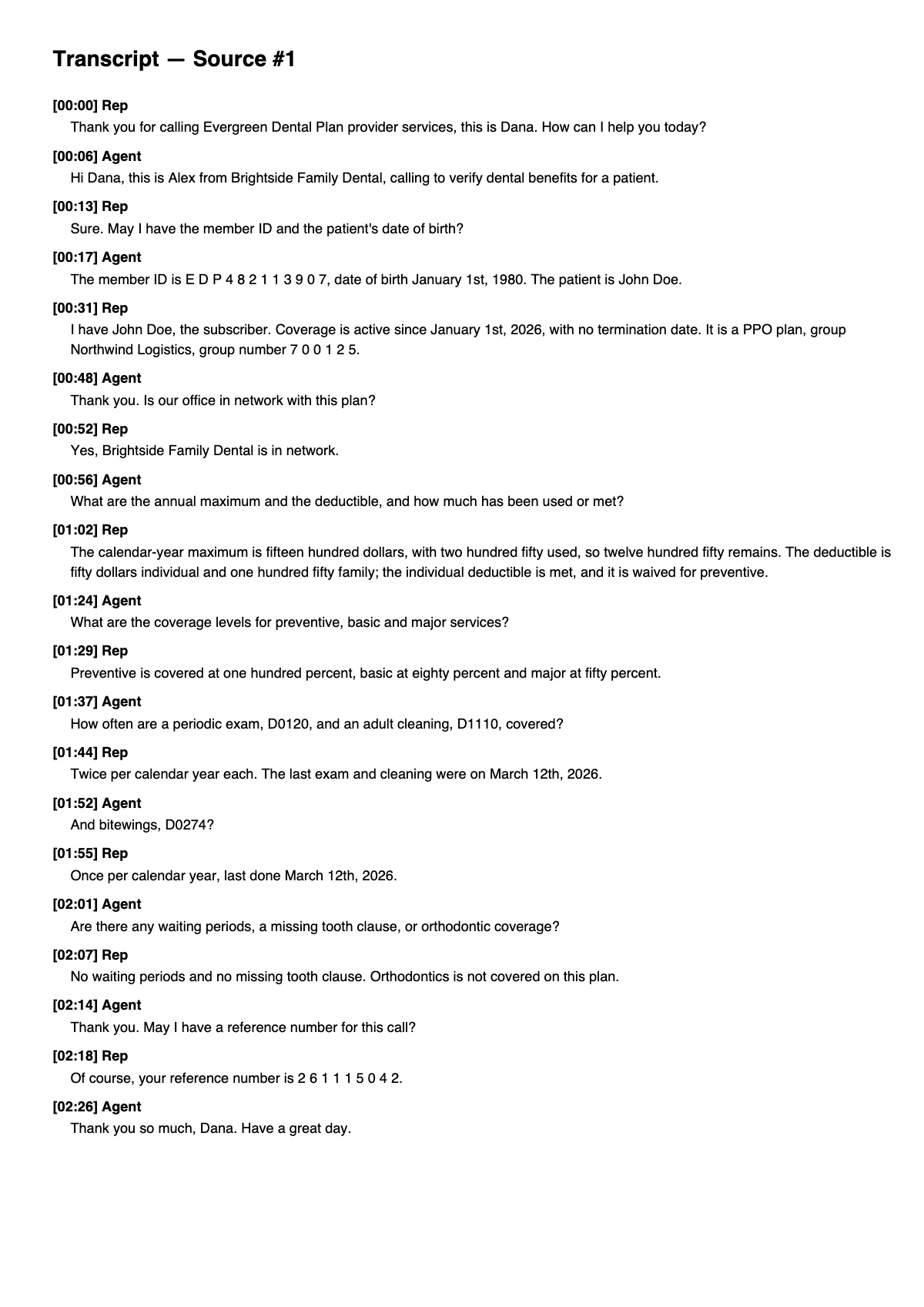
Full transparency, and no contract.
You see every source we used.
The portal record, the fax and the call transcript are attached to every verification. If we make a mistake, you will find it.
You can cancel at any time.
There is no mandatory commitment that locks your practice in.
With both in place, the only way we keep a practice is by being accurate every time.
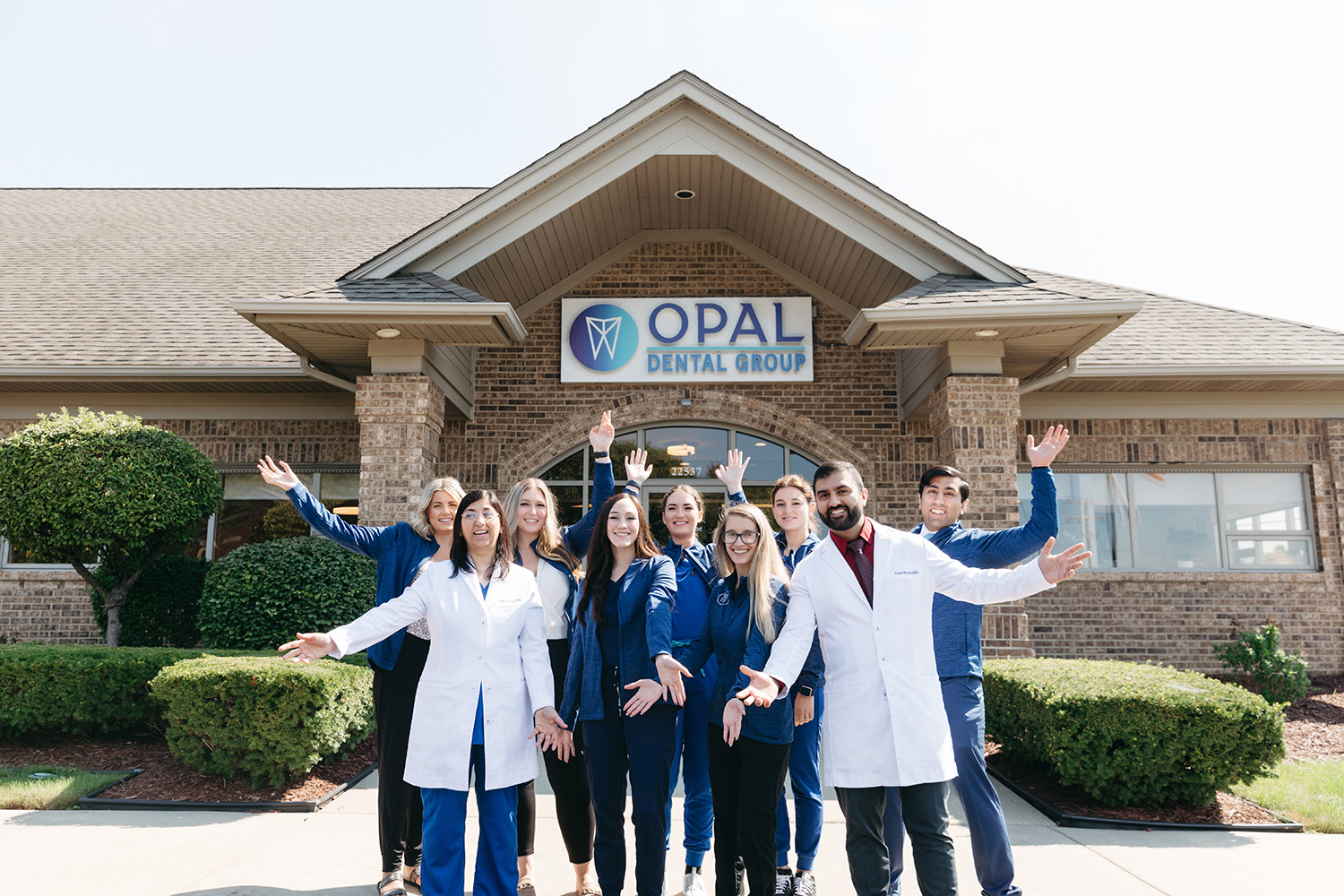
Opal Dental Group
Dental practice in Macomb, Michigan, running Curve Dental.


Out of the 4 solutions we evaluated or tested, Azops Dental was the best.
Verification accuracy, explained.
We don't publish an accuracy percentage. Counting claim denials is the obvious way to measure it, but a denial is only the most severe sign of a wrong verification. Many errors never lead to one: the information can be inaccurate while the patient is still eligible, or the practice notices the problem and completes the work itself. What we can show is the process: every breakdown is built from the carrier portal, the faxed benefits and a live representative call, reviewed by a US-based specialist, and delivered with a source document so you can check any line yourself.
We don't choose one. The contradiction is turned into a clarification question for the live representative call. The representative's answer is recorded in the breakdown, and the transcript is saved in the source document.
Yes. The AI retrieves the information and builds the breakdown. A US-based specialist experienced in insurance verification and insurance billing then double-checks and corrects every breakdown before it is released and written into your dental software.
Open the source document attached to that verification. It contains the portal record, the carrier's fax and the call transcript, so you can see whether the representative gave a wrong answer, left out a detail, or whether we made a mistake.
Many plans have more than one answer to a single question: overlapping frequencies, age limits that change with the patient's age, limits per tooth or per arch, or maximums that depend on the year of coverage. We record each of these as its own structured row and write it back into your plan tables, so nothing related to the questions you want asked is left out.
No. Practices can cancel at any time, with no mandatory commitment.
Azops Dental is an AI agent that automates dental insurance verification for dental clinics, saving practices 90+ hours per month.